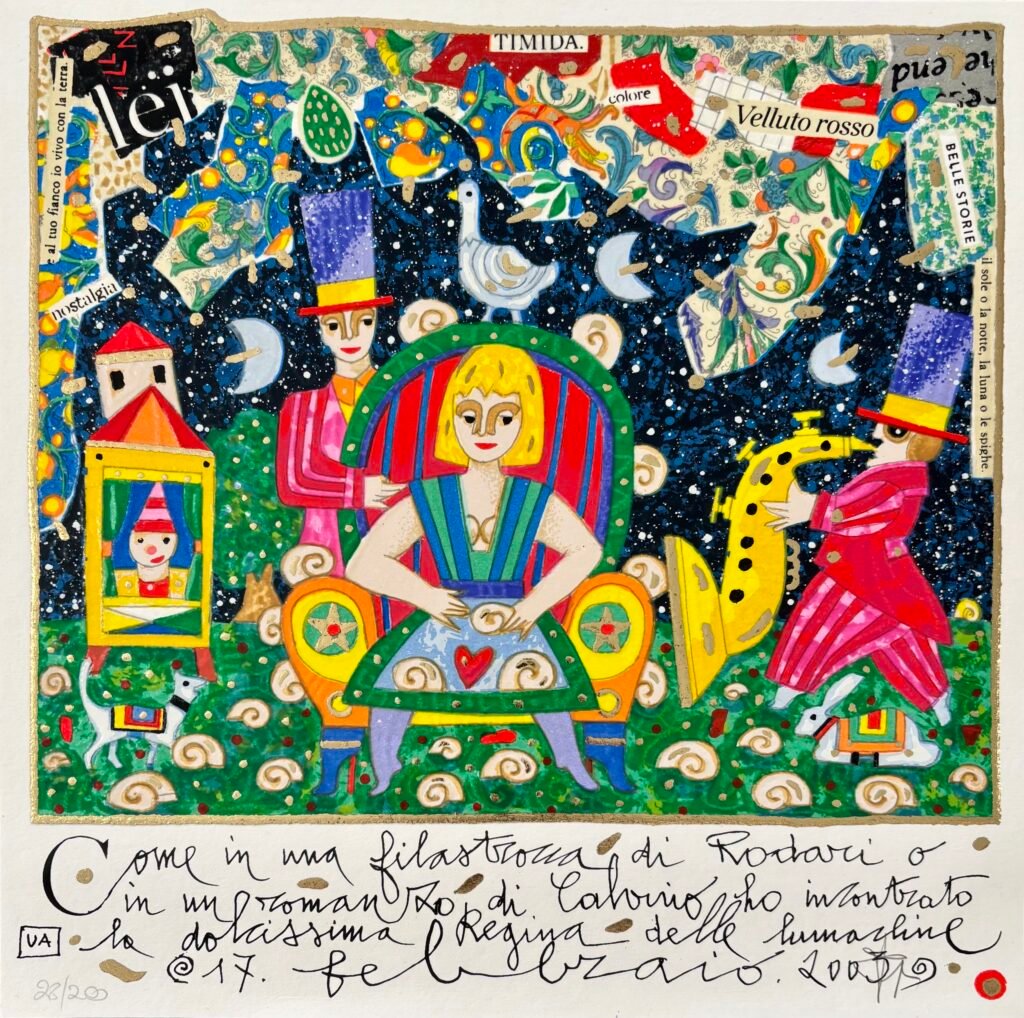
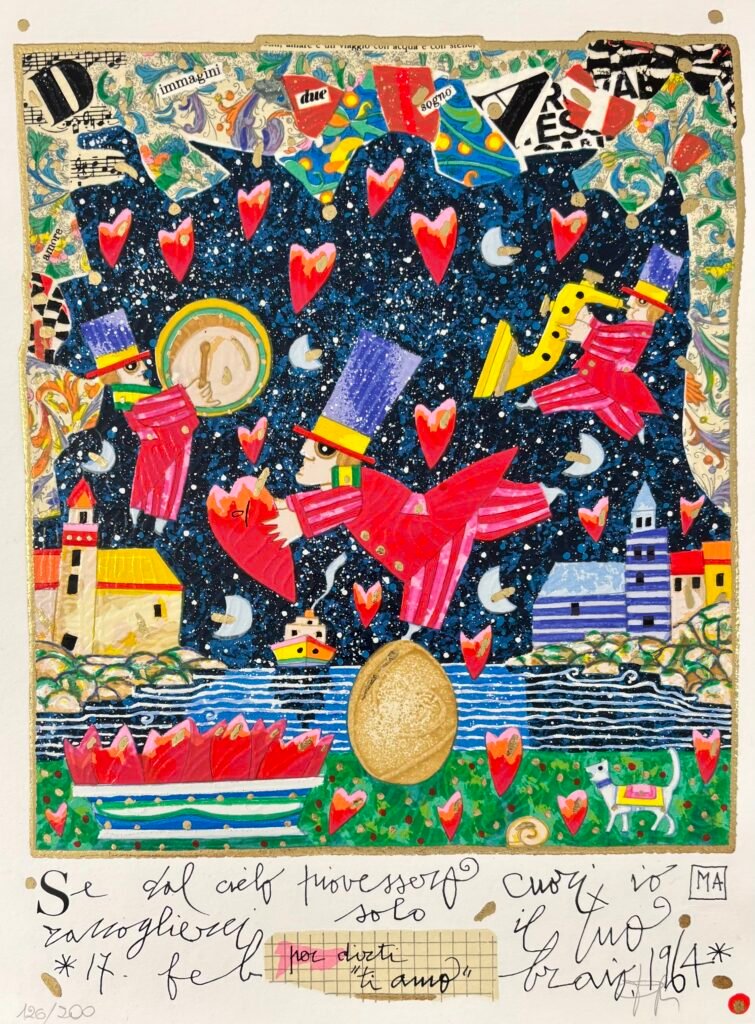
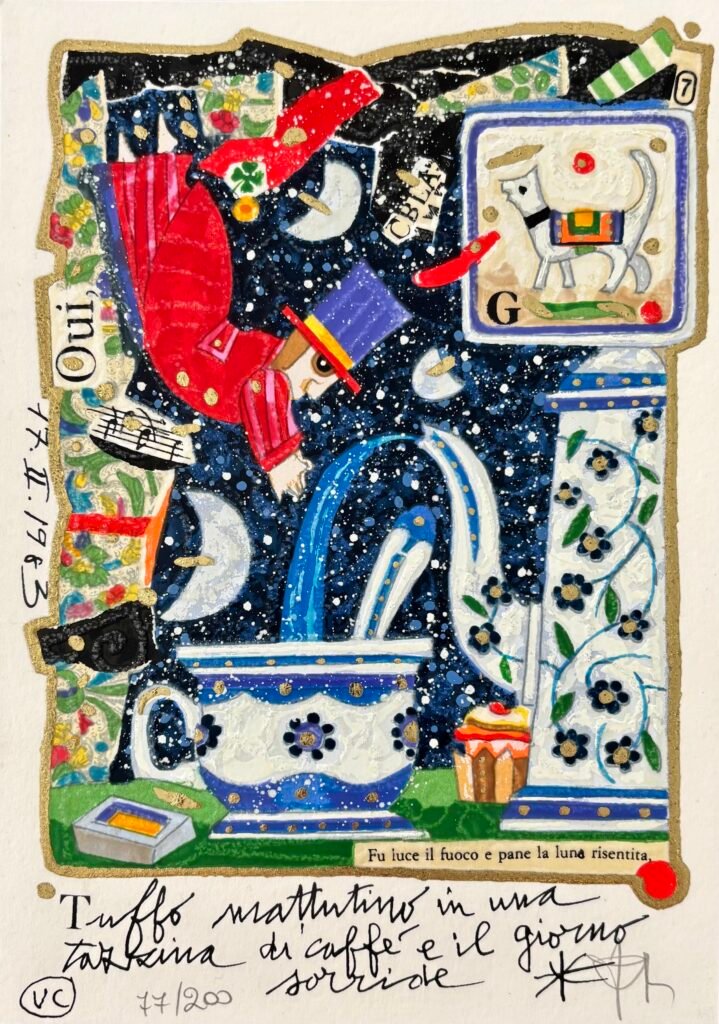
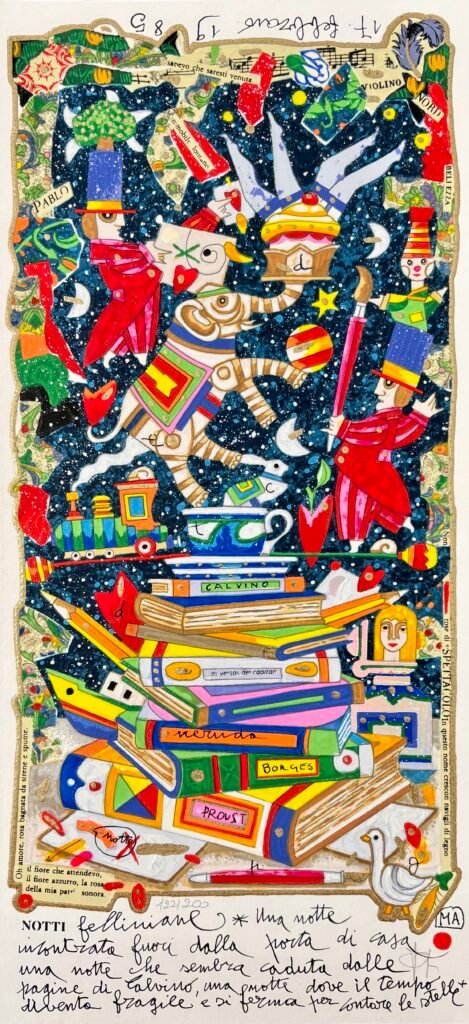
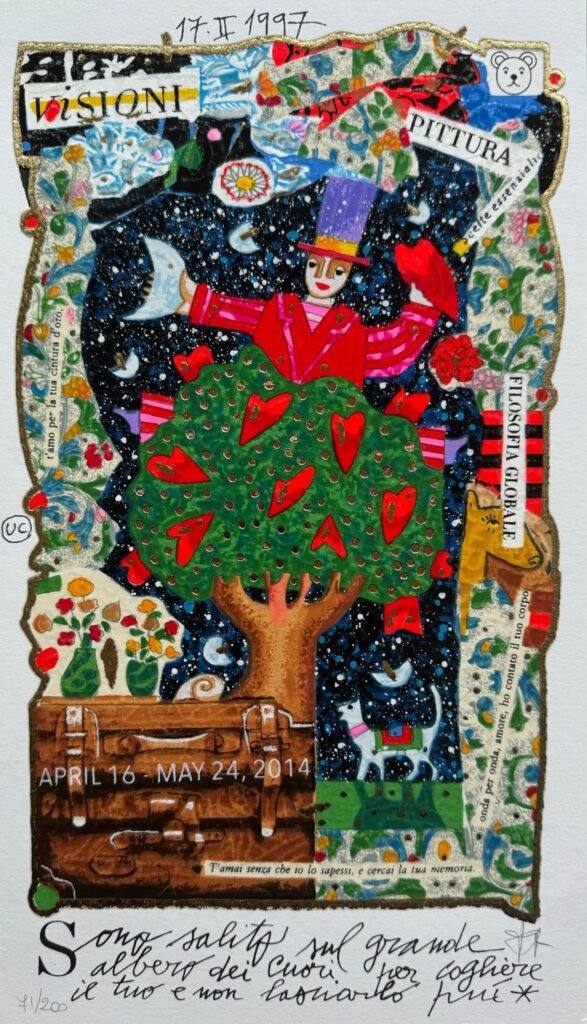
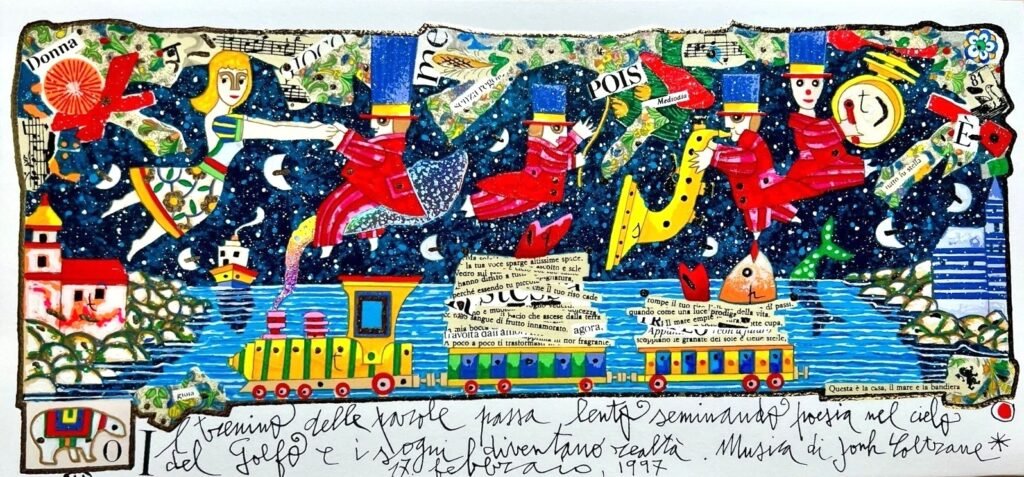
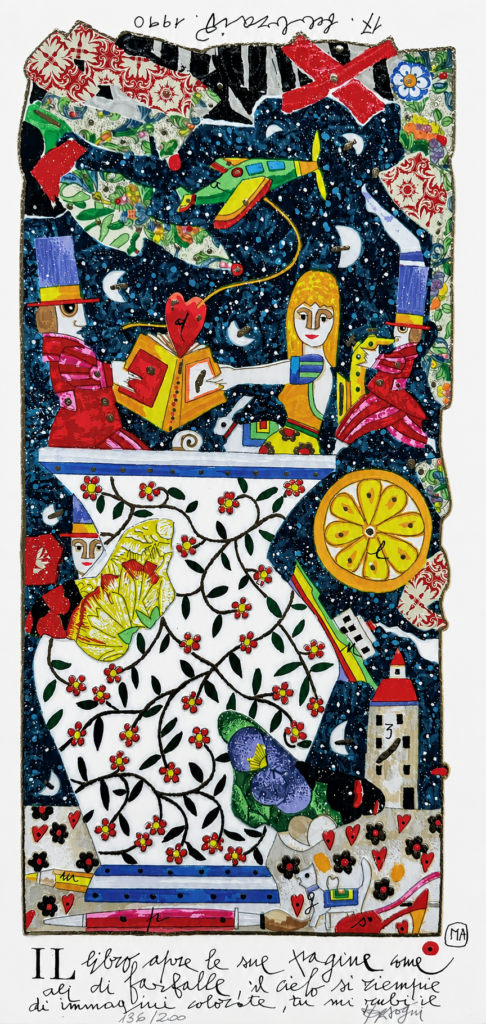
Francesco Musante, born in Genoa on 17 February 1950, is one of Liguria's leading artists. He first graduated from the Art High School in Genoa and subsequently attended the Genoa branch of the Albertina Academy of Fine Arts in Turin. During the 1970s, at the height of the student protest movement, he decided to enrol in the Faculty of Philosophy at the University of Genoa while also attending painting courses at the Academy of Fine Arts in Carrara. His earliest artistic experiments date back to 1967 and consisted primarily of abstract explorations featuring large fields of colour. The following year, he began exhibiting his works in group exhibitions, painting competitions, and art awards. His works from 1969–1970 reveal the influence of Pop Art and Robert Rauschenberg's Combine Paintings. In 1971, he decided to devote himself entirely to his artistic career, and two years later he made his debut with a group exhibition and a solo show held at the gallery Il Quadrifoglio in La Spezia. This marked a significant turning point, signalling the beginning of his long and successful artistic career, including his work as a printmaker. From 1983 onwards, his works would also appear in the catalogues of Incisioni originali italiane e straniere dell’800 e moderne of the Antiquarian Bookshop of Dino and Paolo Prandi. Until the mid-1970s, Musante regularly spent time in Turin, particularly at the Galleria Sperone, where he met several artists associated with the Arte Povera movement, including Giuseppe Penone. In 1975, his artistic practice underwent a significant shift as Musante turned towards figurative painting, initially creating a series of female figures inspired by Gustav Klimt and the Vienna Secession. He continued to explore this theme over the following decade, experimenting with a wide range of techniques, from watercolour and oil painting to collage and printmaking, and working on various surfaces, including canvas, wood, ceramics, printing plates, and paper. Gradually, he also began exploring graphic art and watercolour painting, revealing the first signs of the narrative and fantastical elements that would come to define his work from 1985 to the present day. His characteristic little figures began to emerge, seemingly stepping out of the pages of a fairy tale and inhabiting imaginative worlds filled with objects, characters, and words. His paintings finally moved away from their earlier dramatic atmospheres, embracing a lighter, more playful and poetic dimension. Throughout his artistic career, Musante has also illustrated numerous books of short stories and fairy tales. Since 1971, he has participated in more than 400 solo and group exhibitions internationally.