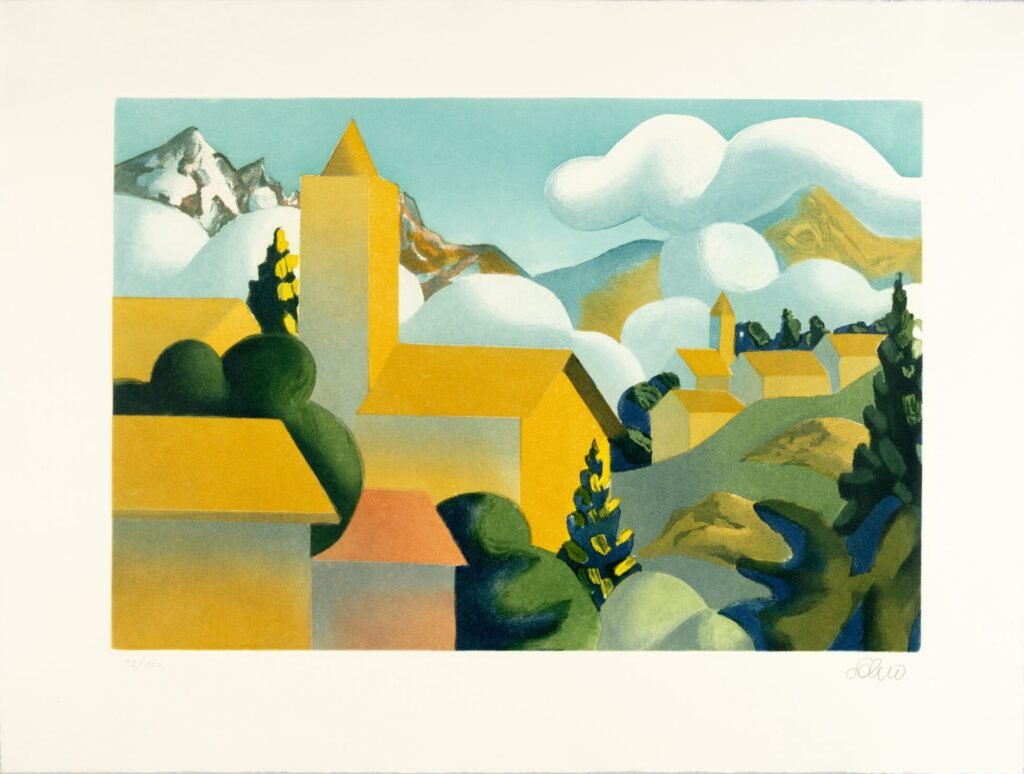
Salvo (Salvatore Mangione)** was born in Leonforte, in the province of Enna, Sicily, in 1947. In 1956, he moved to Turin, where, in 1962, he visited an exhibition of Francis Bacon's work at the Galleria d'Arte Moderna, an experience that left a profound impression on him. The following year, he participated in the 121st Exhibition of the Società Promotrice di Belle Arti with a drawing inspired by Leonardo da Vinci. During this period, he also produced copies of works by Rembrandt, Van Gogh, Fontana, and Chagall. In 1968, he travelled to Paris and, upon his return, became involved in the Arte Povera artistic milieu, establishing connections with critics such as Renato Barilli, Germano Celant, and Achille Bonito Oliva. In 1969, he came into contact with American conceptual artists Joseph Kosuth, Sol LeWitt, and Robert Barry. At the beginning of the 1970s, he began creating photographic works and engraving words or phrases onto marble plaques, including... Salvo è vivo. In 1971, he held solo exhibitions at Paul Maenz's gallery in Cologne and at the Yvon Lambert Gallery in Paris, with which he would continue to collaborate in subsequent years. In 1972, he exhibited at the John Weber Gallery in New York. That same year, he participated in Documenta 5 in Kassel. From 1973 onwards, Salvo returned to traditional painting, embarking on a new artistic direction with his d’après, iniziati già nel 1970 con Autoritratto come RaffaelloHe exhibited these works both in Italy and internationally. From 1976 onwards, he developed a series of simplified landscapes characterised by brilliant colours, architectural ruins, and views featuring classical columns. These works are distinguished by the artist's masterful rendering of natural light, capturing with remarkable realism the changing atmospheres of dawn, daylight, sunset, and night. These landscapes became his most celebrated works and, between 1982 and 1983, brought him widespread recognition across Europe, with retrospective exhibitions in Ghent, Lucerne, and Lyon. He also participated in Documenta 5 in Kassel in 1972 and the Venice Biennale in 1976 and 1984. Following his international success, he exhibited regularly in Italy, including Milan, Genoa, and Rome, as well as abroad, in cities such as New York, Stuttgart, Munich, and Cologne. In 1998, a major retrospective of his work opened at Villa delle Rose in Bologna, curated by Renato Barilli, Danilo Eccher, and Dede Auregli. After a brief hiatus, Salvo embarked on a new phase of artistic research in 2005. Moving away from the valleys that had dominated his work in previous years, he turned his attention to plains, introducing an innovative perspective into his landscape compositions. Salvo died in Turin in 2015. Even after his death, his artistic legacy continues to be celebrated through numerous retrospective and solo exhibitions dedicated to his work.
Salvo (Salvatore Mangione)** was born in Leonforte, in the province of Enna, Sicily, in 1947. In 1956, he moved to Turin, where, in 1962, he visited an exhibition of Francis Bacon's work at the Galleria d'Arte Moderna, an experience that left a profound impression on him. The following year, he participated in the 121st Exhibition of the Società Promotrice di Belle Arti with a drawing inspired by Leonardo da Vinci. During this period, he also produced copies of works by Rembrandt, Van Gogh, Fontana, and Chagall. In 1968, he travelled to Paris and, upon his return, became involved in the Arte Povera artistic milieu, establishing connections with critics such as Renato Barilli, Germano Celant, and Achille Bonito Oliva. In 1969, he came into contact with American conceptual artists Joseph Kosuth, Sol LeWitt, and Robert Barry. At the beginning of the 1970s, he began creating photographic works and engraving words or phrases onto marble plaques, including... Salvo è vivo. In 1971, he held solo exhibitions at Paul Maenz's gallery in Cologne and at the Yvon Lambert Gallery in Paris, with which he would continue to collaborate in subsequent years. In 1972, he exhibited at the John Weber Gallery in New York. That same year, he participated in Documenta 5 in Kassel. From 1973 onwards, Salvo returned to traditional painting, embarking on a new artistic direction with his d’après, iniziati già nel 1970 con Autoritratto come RaffaelloHe exhibited these works both in Italy and internationally. From 1976 onwards, he developed a series of simplified landscapes characterised by brilliant colours, architectural ruins, and views featuring classical columns. These works are distinguished by the artist's masterful rendering of natural light, capturing with remarkable realism the changing atmospheres of dawn, daylight, sunset, and night. These landscapes became his most celebrated works and, between 1982 and 1983, brought him widespread recognition across Europe, with retrospective exhibitions in Ghent, Lucerne, and Lyon. He also participated in Documenta 5 in Kassel in 1972 and the Venice Biennale in 1976 and 1984. Following his international success, he exhibited regularly in Italy, including Milan, Genoa, and Rome, as well as abroad, in cities such as New York, Stuttgart, Munich, and Cologne. In 1998, a major retrospective of his work opened at Villa delle Rose in Bologna, curated by Renato Barilli, Danilo Eccher, and Dede Auregli. After a brief hiatus, Salvo embarked on a new phase of artistic research in 2005. Moving away from the valleys that had dominated his work in previous years, he turned his attention to plains, introducing an innovative perspective into his landscape compositions. Salvo died in Turin in 2015. Even after his death, his artistic legacy continues to be celebrated through numerous retrospective and solo exhibitions dedicated to his work.